

If you have come across the term kornwurm, you may be wondering what it is, why it appears in stored grains, and whether it can damage crops or food supplies. Many people search for this topic after noticing insects in flour, wheat, corn, or other stored products.
This guide explains everything in simple language, including identification, causes, prevention methods, treatment options, and practical tips for keeping your food safe.
What Is Kornwurm?
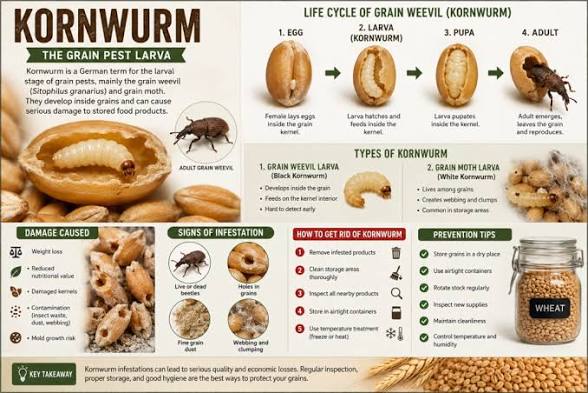
The word kornwurm is commonly used to describe grain worms or larvae that infest stored grains and grain-based products. These pests are not a single insect species. Instead, the term often refers to the larvae of beetles or moths that feed on cereals, flour, rice, corn, oats, and similar foods.
Although they are small, they can multiply quickly if food is stored under warm and humid conditions.
Where Does Kornwurm Come From?
Most infestations begin when insect eggs are already present in packaged grain products before they reach your home or warehouse.
Once conditions become favorable, the eggs hatch into larvae, which begin feeding on stored food.
Common places where they appear include:
- Flour containers
- Rice bags
- Wheat storage bins
- Corn storage
- Oatmeal packages
- Animal feed
- Bird seed
Even clean kitchens can experience an infestation if contaminated products are brought inside.
Signs of an Infestation
Recognizing the problem early helps reduce damage.
Common signs include:
- Small white or cream-colored larvae
- Tiny beetles or moths nearby
- Web-like material inside food packages
- Clumped flour or grains
- Small holes in packaging
- Powdery residue around stored foods
If several of these signs appear together, immediate action is recommended.
Why Do Grain Pests Appear?
Several environmental factors encourage insect growth.
These include:
- High humidity
- Warm temperatures
- Long-term food storage
- Poorly sealed containers
- Lack of regular pantry cleaning
Even unopened packages can sometimes contain insect eggs that later develop into larvae.
Foods Most Commonly Affected
These pests feed on many dry food products.
Examples include:
- Wheat
- Rice
- Corn
- Flour
- Pasta
- Cereal
- Oats
- Beans
- Dry pet food
- Seeds
Checking these products regularly helps prevent larger infestations.
How to Get Rid of Kornwurm
Removing an infestation requires a few simple steps.
Step 1: Inspect Everything
Check every dry food product in your pantry or storage area.
Look for larvae, insects, or damaged packaging.
Step 2: Throw Away Contaminated Food
Dispose of heavily infested products in sealed bags to prevent insects from spreading.
Step 3: Clean Storage Areas
Vacuum shelves thoroughly.
After vacuuming, wipe shelves using warm water and mild soap.
Pay special attention to corners and cracks.
Step 4: Store Food Properly
Transfer grains and flour into airtight containers made from glass or thick plastic.
Proper storage greatly reduces future infestations.
Natural Prevention Methods
Many homeowners prefer chemical-free prevention.
Helpful methods include:
- Keep storage areas dry.
- Rotate older food before opening new packages.
- Buy only the amount you can use within a reasonable time.
- Freeze newly purchased flour or grains for several days before storage.
- Clean pantry shelves regularly.
- Remove food spills immediately.
These simple habits reduce the chances of insects multiplying.
Can They Harm People?
These insects are generally not considered dangerous to humans.
They do not bite or spread diseases in the way mosquitoes or ticks do.
However, food that is heavily infested becomes contaminated and is generally unsuitable for consumption because it may contain insect waste, webbing, eggs, and damaged material.
How Farmers Protect Stored Grain
Large farms and commercial storage facilities use several preventive measures.
These include:
- Temperature monitoring
- Moisture control
- Regular inspections
- Proper ventilation
- Professional pest management
- Sanitized storage equipment
These practices help reduce crop losses and maintain food quality.
Common Mistakes to Avoid
Many infestations continue because of avoidable mistakes.
Avoid these common errors:
- Ignoring small insects
- Mixing old grain with new supplies
- Leaving food in opened paper bags
- Storing products in humid places
- Waiting too long before cleaning affected shelves
Early action is always easier than treating a severe infestation.
Frequently Asked Questions
Are grain worms the same as mealworms?
No. Mealworms belong to a specific beetle species, while grain pests may come from several different insects.
Can freezing grains help?
Yes. Freezing dry grains for a few days can kill insect eggs and larvae before long-term storage.
Should all pantry food be thrown away?
No. Only products showing signs of infestation should be discarded. Unaffected items stored in sealed containers can usually be kept.
Can the problem return?
Yes. If storage conditions remain warm, humid, or unclean, insects may return.
Final Thoughts
Understanding kornwurm helps homeowners, farmers, and food storage managers protect grain products from unnecessary damage. Regular inspections, proper storage, good hygiene, and early intervention are the most effective ways to prevent infestations. By following simple preventive measures, you can keep your pantry cleaner, reduce food waste, and maintain the quality of stored grains throughout the year.