
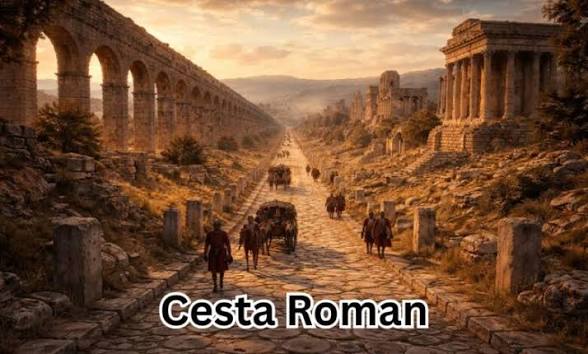

If you are searching for cesta roman, you may want to understand its meaning, historical background, and significance. This guide explains everything in simple language so that beginners can easily understand the topic.
Whether you are interested in history, culture, or travel, learning about can provide valuable insights into ancient civilizations and their influence on modern society.
What Is Cesta Roman?
Cesta roman is a term associated with roads and routes that played a crucial role in connecting cities, facilitating trade, and supporting military movements during the Roman Empire.
These roads were known for their durability and engineering excellence. Many of them influenced transportation networks that still exist today.
History of Cesta Roman
The development of dates back to ancient Rome. Roman engineers built extensive road systems to strengthen communication across the empire.
Some major purposes of these roads included:
- Supporting military campaigns.
- Improving trade routes.
- Connecting provinces.
- Encouraging cultural exchange.
- Enhancing administration.
Because of these functions, the Roman Empire maintained strong control over vast territories.
Why Was Cesta Roman Important?
The importance of can be understood through several factors.
Efficient Transportation
Roman roads allowed travelers and merchants to move quickly between regions.
Expansion of Trade
Goods such as olive oil, wine, and textiles were transported through these routes.
Military Advantages
The Roman army relied heavily on organized road networks.
Cultural Influence
Ideas, languages, and traditions spread more easily through connected regions.
These factors contributed significantly to the success of ancient Rome.
Construction Techniques Used in Cesta Roman
One reason historians admire is the advanced engineering involved.
Strong Foundation
Builders prepared the ground carefully before laying stones.
Multiple Layers
Roads often contained:
- Large stones.
- Gravel.
- Sand.
- Paving materials.
Drainage Systems
Proper drainage helped roads remain usable for long periods.
Straight Routes
Roman engineers preferred direct paths whenever possible to improve efficiency.
Many sections survived for centuries because of these construction methods.
Famous Examples Related to Cesta Roman
Several Roman roads became historically significant.
Via Appia
Often called the “Queen of Roads,” it connected Rome with southern Italy.
Via Aurelia
This route linked Rome with coastal regions.
Via Flaminia
It played a major role in connecting northern and central Italy.
These examples demonstrate how shaped transportation across the empire.
How Roman Roads Influenced Modern Infrastructure
Modern highways and transportation systems have inherited many concepts from .
Some examples include:
- Direct route planning.
- Durable construction.
- Organized road networks.
- Milestone markers.
- Efficient travel systems.
Engineers continue to study Roman methods because many ancient roads remain remarkably preserved.
Interesting Facts About Cesta Roman
Here are some fascinating facts:
- Roman roads stretched for thousands of kilometers.
- Many roads were built over 2,000 years ago.
- Some ancient routes are still visible today.
- Soldiers and traders used the same networks.
- Road construction followed strict standards.
These achievements highlight the remarkable engineering abilities of Roman civilization.
Who Studies Cesta Roman Today?
Various groups remain interested in cesta roman, including:
Historians
They analyze the impact of Roman transportation systems.
Archaeologists
They excavate and preserve ancient roads.
Engineers
Modern experts study Roman techniques for inspiration.
Travelers
Many tourists visit surviving Roman routes to experience history firsthand.
Common Questions About Cesta Roman
Why Did Romans Build So Many Roads?
The primary reasons were trade, communication, and military efficiency.
Are Roman Roads Still Used Today?
Some ancient paths continue to influence modern transportation networks.
What Materials Were Used?
Builders commonly used stone, gravel, and sand arranged in multiple layers.
Why Is Cesta Roman Famous?
Its durability and engineering excellence have made it one of the greatest achievements of ancient civilization.
Lessons We Can Learn
The story of cesta roman teaches several valuable lessons:
- Good planning produces long-lasting results.
- Infrastructure supports economic growth.
- Innovation can survive for centuries.
- Strong connections strengthen societies.
These principles remain relevant in the modern world.
Final Thoughts
Understanding cesta roman offers a glimpse into the remarkable achievements of ancient Rome. From trade and military strategy to engineering and cultural exchange, these road systems transformed history in profound ways..